Carry Method

Off-Body Carry

Carrying in a purse, sling bag or backpack instead of on your body. It's the most flexible option for clothing and gun size — and the one that demands the most discipline, because the gun is no longer attached to you.

What is off-body carry?

Off-body carry means the firearm travels in a bag — a dedicated concealed-carry purse, sling pack, or backpack — rather than in a holster on your waistband or body. A proper CCW bag has a separate, often lockable compartment with a holster that keeps the trigger covered and the gun oriented for a consistent draw.

The appeal is flexibility: you can carry a larger gun than your clothing would allow, dress however you like, and add the gun to an outfit that simply can't support on-body carry. But that flexibility comes with real responsibility — the bag can be set down, forgotten, or grabbed, and access is slower than reaching to your belt.

Treat off-body as a supplement to on-body carry, chosen deliberately, not a default. With the right bag and strict habits it's a legitimate option; done carelessly it's a liability.

Off-body carry at a glance

Concealability
Comfort
Accessibility
Retention
Ease of use

Scores are relative to other carry methods, 1 (low) to 5 (high).

Pros and cons of off-body carry

Pros

  • Total wardrobe freedom — no waistband required
  • Can carry a larger gun and spare gear
  • Comfortable; no weight on the belt or body
  • Great when on-body carry genuinely isn't possible
  • Easy to share carry duties across outfits and seasons

Cons

  • Slower access than on-body carry
  • The bag can be set down, forgotten or stolen — with the gun in it
  • Requires constant control and awareness of the bag
  • Tempting target if it's an obvious "gun bag"
  • Demands more discipline than any other method

The rules that make off-body safe: use a dedicated bag with a holstered, lockable gun compartment; keep the bag physically on your body at all times; never set it down or leave it unattended; and store it secured away from children when not carried.

Who off-body carry is best for

Off-body carry fits people whose clothing truly can't support on-body carry, those who need to carry a larger handgun than their wardrobe allows, and anyone who treats bag control as a serious, practiced habit. If you're prone to setting your bag down, it isn't for you — choose a belly band or on-body women's option instead.

Tips for carrying off-body well

  • Buy a real CCW bag. A dedicated, lockable compartment with a holster is the minimum — never a gun loose in a normal purse.
  • Keep it on you. Strap across the body; never hang it on a chair or set it on the floor.
  • Stay low-key. An ordinary-looking bag draws less attention than obvious tactical branding.
  • Practice the draw. Rehearse opening the compartment and acquiring a firing grip quickly and consistently.
  • Lock it down at home. When you're not carrying, secure the gun — especially around children.

Best off-body carry bags

Disclosure: We independently research what we recommend and may earn a commission if you buy through links on this page — at no extra cost to you. Learn more.

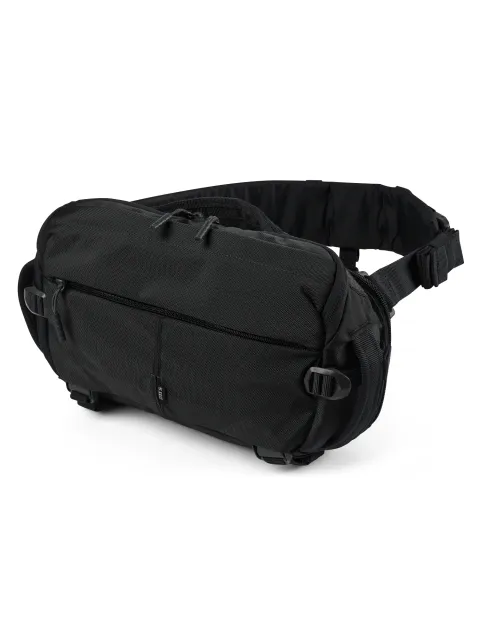
5.11 Select Carry Sling Pack holster Best off-body sling pack

5.11 Select Carry Sling Pack

5.11 Tactical · Nylon sling pack with CCW compartment

  • Dedicated, lockable concealed-carry compartment
  • Ambidextrous quick-access strap
  • Looks like an ordinary everyday bag
$60–$90 Check Price

Quick comparison

Holster Best for Material Price Link
5.11 Select Carry Sling Pack Best off-body sling pack Nylon sling pack with CCW compartment $60–$90 Check Price

Frequently asked questions

Is off-body carry a bad idea?
It's the highest-discipline method, not automatically a bad one. The risks are real: slower access, and the bag can be set down, forgotten, or stolen. If you carry off-body, use a dedicated CCW bag, keep it on your body at all times, and never leave it unattended.
What makes a bag a real CCW bag?
A separate, lockable compartment that holds a holster (so the trigger stays covered) and gives a consistent, quick-access draw. A gun loose in a regular purse is unsafe and slow.
Who is off-body carry best for?
People whose clothing genuinely can't support on-body carry, or who need to carry a larger gun than their wardrobe allows. It's a supplement to on-body carry more than a replacement.

Related carry methods