Carry Method

Shoulder Holsters

A harness carries the gun under your arm and the weight on your shoulders instead of your belt. It shines for jacket carry, long hours seated, and larger pistols — but it always needs a cover garment you keep on.

What is a shoulder holster?

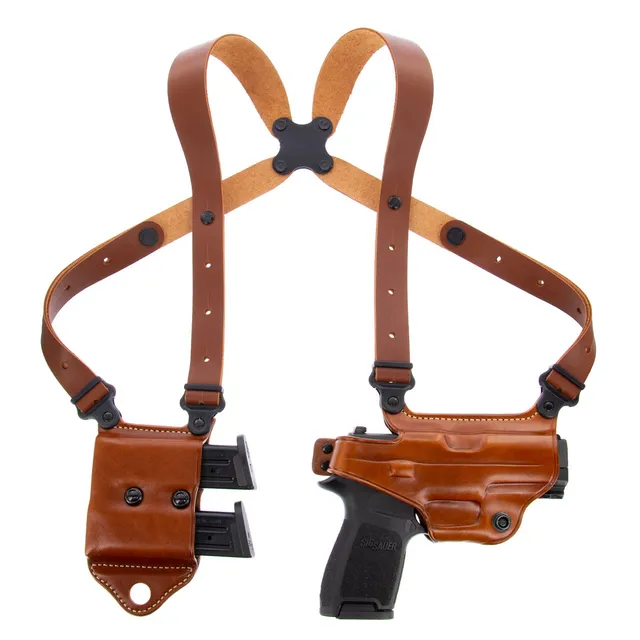
A shoulder holster is a harness worn over both shoulders, with the gun riding under your non-dominant arm and (usually) spare magazines under the other for balance. The load hangs from your shoulders rather than your waist, which is a relief if a belt holster is uncomfortable or you carry a heavy gun.

Shoulder rigs come in horizontal and vertical styles. Horizontal carry is fast and compact but points the muzzle behind you; vertical carry handles bigger, heavier guns and points the muzzle down or up. Either way, you draw across the body, so it pairs naturally with an open jacket or vest.

The method is at its best in specific situations rather than as an everyday default — cold weather, a lot of driving, or when waistband carry simply isn't working for you.

Shoulder holster at a glance

Concealability
Comfort
Accessibility
Retention
Ease of use

Scores are relative to other carry methods, 1 (low) to 5 (high).

Pros and cons of shoulder carry

Pros

  • Takes weight off the belt and hips
  • Excellent access while seated or driving
  • Handles full-size, heavy handguns comfortably
  • Pairs perfectly with jackets and cooler weather
  • Keeps the gun accessible when wearing a belt is impractical

Cons

  • Requires a cover garment you never take off in public
  • Draw sweeps a wide arc — muzzle direction needs care
  • Slower, less intuitive draw than belt carry
  • Proper fitting and adjustment take time
  • Bulkier and warmer than a slim IWB rig

Who shoulder carry is best for

Shoulder holsters make the most sense for people who spend long stretches seated or driving, who live in cooler climates where a jacket is normal, who carry larger handguns, or who have back or hip issues that make belt carry uncomfortable. They're also popular as a comfortable way to carry a big gun on the move outdoors.

Tips for carrying with a shoulder holster

  • Use the belt tie-downs. Anchoring the harness keeps it from shifting and makes the draw consistent.
  • Fit the harness properly. A self-balancing back-strap spreads the load and stops the rig digging into one shoulder.
  • Match orientation to your gun. Vertical for heavy/full-size pistols; horizontal for compacts and speed.
  • Mind your muzzle. Practice the cross-body draw until it's safe and second nature.
  • Plan your cover garment. An open jacket or vest you can keep on is essential to concealment.

Best shoulder holsters

Disclosure: We independently research what we recommend and may earn a commission if you buy through links on this page — at no extra cost to you. Learn more.

Galco Miami Classic II holster Best shoulder rig

Galco Miami Classic II

Galco · Premium leather harness

  • Self-balancing back-strap spreads weight evenly
  • Includes dual magazine carrier
  • The benchmark vertical-carry shoulder holster
$140–$190 Check Price

Quick comparison

Holster Best for Material Price Link
Galco Miami Classic II Best shoulder rig Premium leather harness $140–$190 Check Price

Frequently asked questions

Are shoulder holsters practical for everyday carry?
They shine in specific cases — cold-weather jacket carry, a lot of seated time (driving), or when a belt holster isn't comfortable. For day-to-day carry in normal clothing they're less practical than IWB or OWB because they require a cover garment you never remove.
Vertical or horizontal shoulder carry?
Horizontal carry is fast and works well with compact pistols, but the muzzle points behind you. Vertical carry handles full-size and heavier guns better and points the muzzle down or up. Choose based on your gun size and your comfort with muzzle direction.
Do shoulder holsters need a special belt or tie-down?
Most quality rigs include belt tie-downs that anchor the harness so it doesn't shift. Using them keeps the draw consistent and the rig from sagging.

Related carry methods